
In Dushanbe earlier in October, Russian leader Vladimir Putin seemed a bit disappointed with the state of Russia-Central Asia relations. Speaking at the second Russia-Central Asia Summit, Putin noted Russia’s trade turnover with the region exceeded $45 billion last year.
“On whole, not a bad result,” he said, looking up from his notes. “But, with Belarus we have a trade turnover of $50 billion, and I remind you that 10 million people live in Belarus. In Uzbekistan, there are already almost 40 [million]. In Tajikistan, I heard 10.”
The subtext was clear. Though the links between Russia and the region remain robust, the Kremlin’s influence is not as strong as Putin would like.
In the immediate aftermath of Russia’s unprovoked attack on Ukraine in 2022, there was some speculation in the West that Central Asia might drift from Russia’s orbit. After nearly four years of war, however, Moscow’s ties to the five Central Asian states have changed, but not in the ways, or to the degree, some predicted.
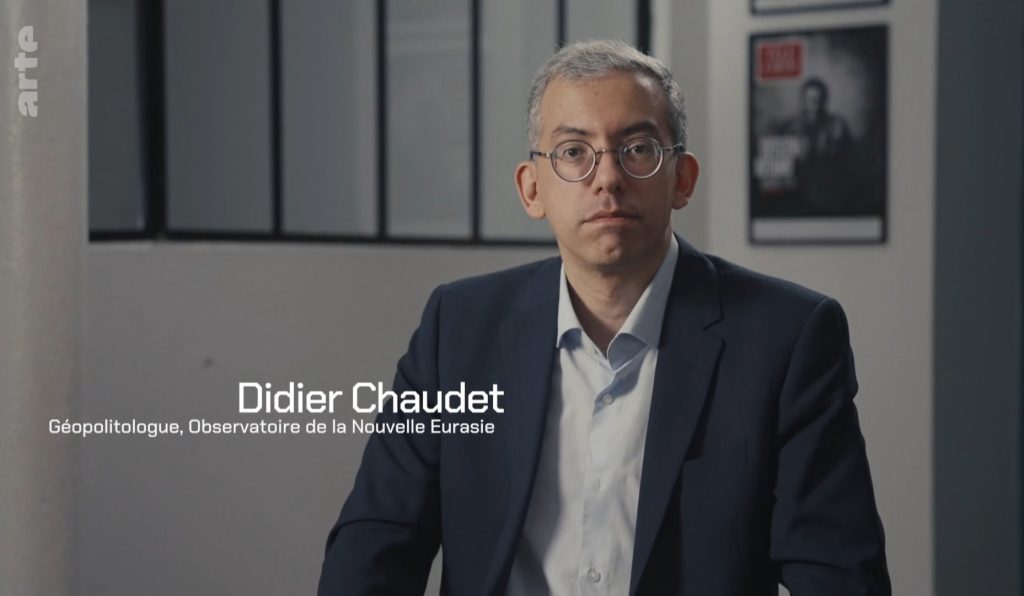
“It seems to me that Putin and [Foreign Minister Sergei] Lavrov have never been so present, have never traveled so much to Central Asian countries than they have since February 24, 2022,” said Michaël Levystone, a Central Asia specialist at France’s National Institute of Oriental Languages and Civilizations and co-founder of the New Eurasia Observatory in Paris.
Trade turnover between the Russia and the region has climbed from $35.8 in 2021 to more than $45 billion last year, juiced by re-export trade and sanctions evasion. And though the Middle Corridor transportation route perhaps receives more attention, the North-South corridor connecting Russia to India, Iran and Pakistan was basically a “dead letter” before the full-scale invasion reawakened it, Levystone said.
© Vladimir Poutine décore Emomali Rakhmon, président de la République du Tadjikistan, de l’ordre Alexandre Nevski (27 février 2017), Wikimedia Commons.