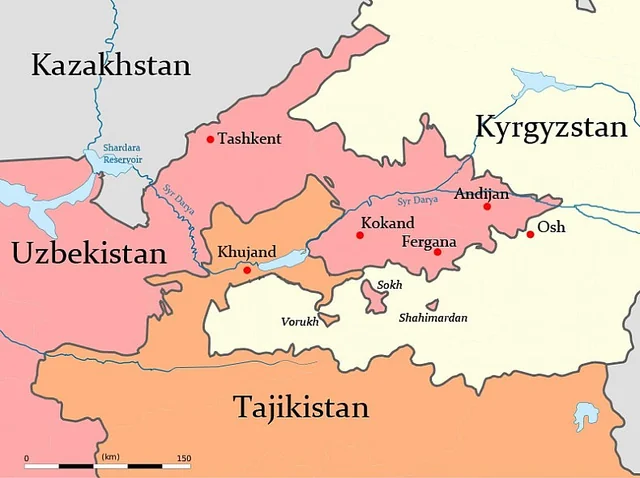
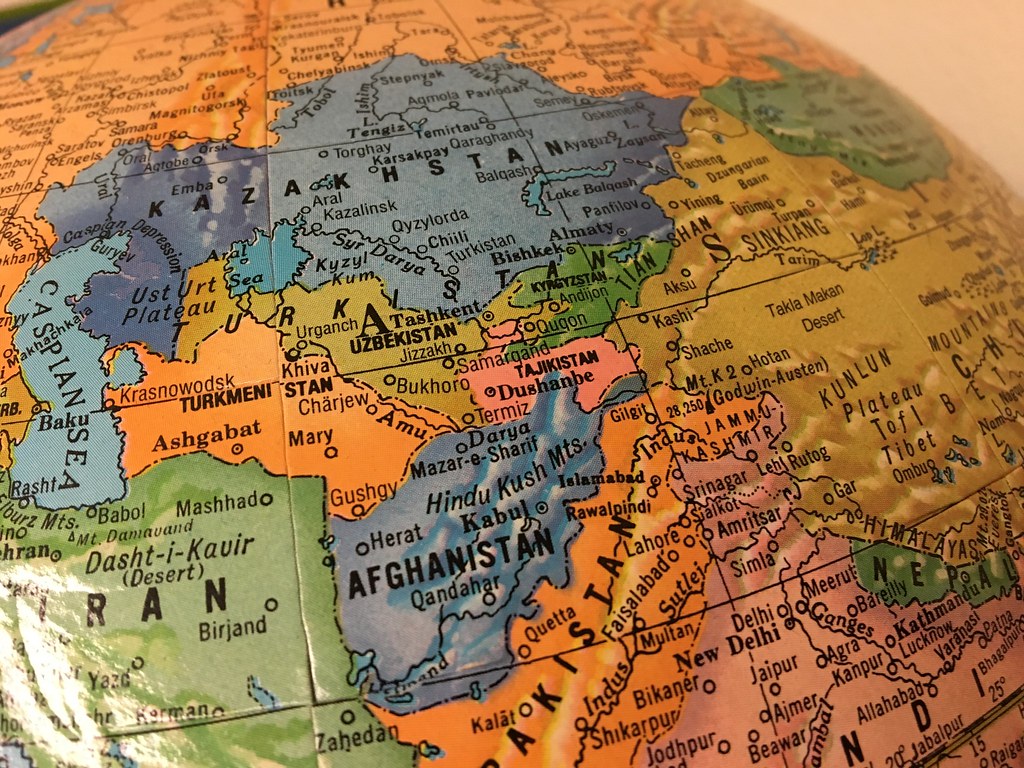
The cynical “special military operation” launched by Vladimir Putin against Ukraine on February 24th, 2022, has increased the geopolitical value of Central Asia, a landlocked region between Russia, China, Afghanistan and Iran comprising five sovereign states – namely Kazakhstan, Kyrgyzstan, Tajikistan, Turkmenistan, and Uzbekistan.
As it represents Russia’s strategic hinterland in Kremlin’s eyes as well as a bridge between Russia and its South-Asian partners, which stand out as of critical significance against the backdrop of heightened economic sanctions, Central Asia reveals too important a region for Moscow to risk losing its influence on it. Russia has undeniably failed to have its course of action taken in Ukraine (not only since 2022, but also since President Putin’s annexation of Crimea back on March 18th, 2014) endorsed by any of Central Asia’s countries – none of which have either supported Russia’s moves in Georgia’s Abkhazia and South Ossetia in August 2008, by passing. Nevertheless, it should be noted that Russia’s influence per se has clearly not waned in all Central Asian states. Both Kyrgyzstan and Tajikistan keep on vitally relying on remittances from Russia, which holds military bases in Bishkek, Dushanbe, and Kurgan-Tyube. Uzbekistan has elevated its relations to a “Comprehensive Strategic Partnership” with Russia, which, in parallel, has manifested an increased interest to renew its cooperation in gas and connectivity with Turkmenistan, a slightly less reclusive state since Taliban’s conquest of Kabul in August 15th, 2021.
As it represents Russia’s strategic hinterland in Kremlin’s eyes as well as a bridge between Russia and its South-Asian partners, which stand out as of critical significance against the backdrop of heightened economic sanctions, Central Asia reveals too important a region for Moscow to risk losing its influence on it. Russia has undeniably failed to have its course of action taken in Ukraine (not only since 2022, but also since President Putin’s annexation of Crimea back on March 18th, 2014) endorsed by any of Central Asia’s countries – none of which have either supported Russia’s moves in Georgia’s Abkhazia and South Ossetia in August 2008, by passing. Nevertheless, it should be noted that Russia’s influence per se has clearly not waned in all Central Asian states. Both Kyrgyzstan and Tajikistan keep on vitally relying on remittances from Russia, which holds military bases in Bishkek, Dushanbe, and Kurgan-Tyube. Uzbekistan has elevated its relations to a “Comprehensive Strategic Partnership” with Russia, which, in parallel, has manifested an increased interest to renew its cooperation in gas and connectivity with Turkmenistan, a slightly less reclusive state since Taliban’s conquest of Kabul in August 15th, 2021.
With Kazakhstan, the closest country, in all meanings of this word, to Russia, the relations have been somewhat souring, though. Aggressive rhetoric is overtly at play in Moscow towards Astana, whose territorial integrity has found itself severely challenged on numerous occasions in return for President Kasym-Jomart Tokayev’s refusal of recognizing Vladimir Putin’s annexation of Eastern regions of Ukraine, unequivocally expressed in the framework of St. Petersburg International Economic Forum in summer 2022. Russia’s blocking of oil exports from Kazakhstan to Europe across Caspian Pipeline Consortium (CPC), which runs from offshore oil fields of the Caspian Sea through Novorossiysk port on the Black Sea, exemplifies the ramping up of the bilateral frictions. As paradoxical as it might sound, the cooling of its relations with its Southern neighbor has not prevented Russia from increasing its trade turnover with the latter since 2022, enhancing its economic footprint in Kazakhstan by the means of Russian companies’ active relocation on this market to circumvent European and US economic sanctions.
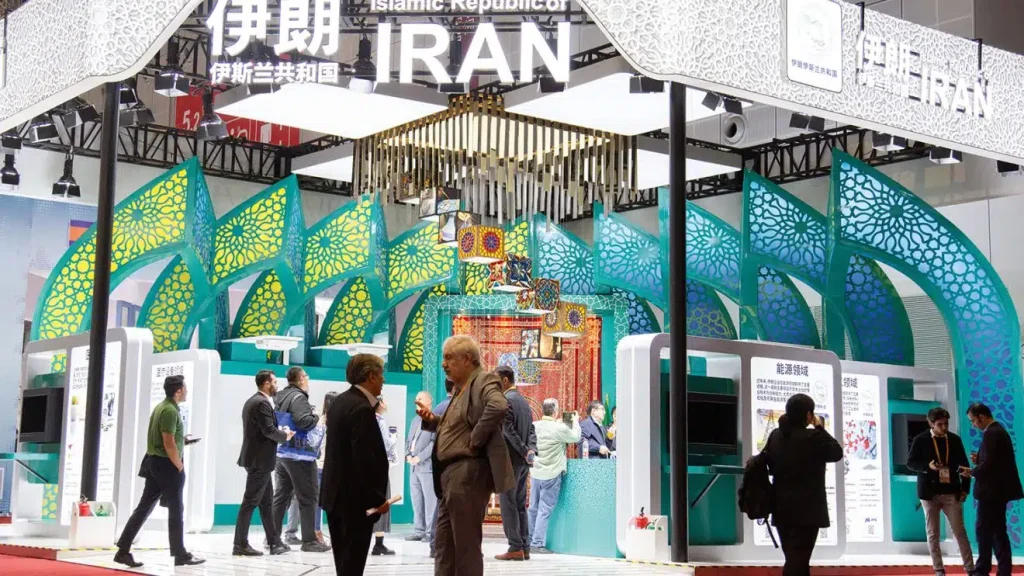
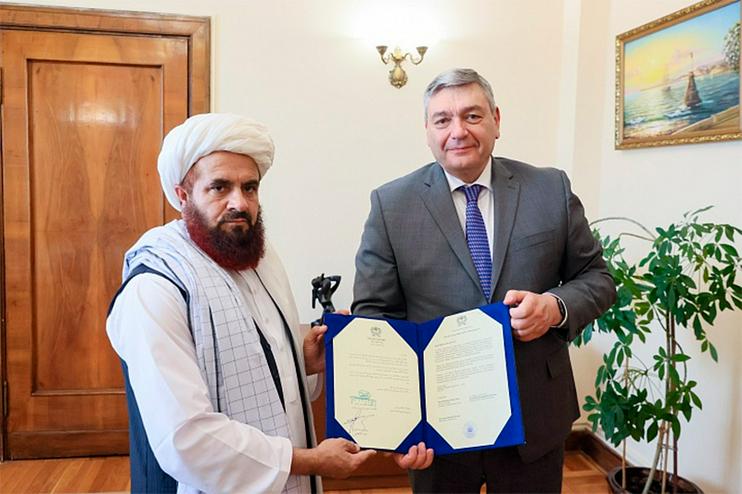
At present, overall, Russia and Central Asian countries share a geopolitical concern and a geoeconomic interest. The concern is centered around the fate of Afghanistan, where Taliban regime officially recognized by Russia on July 3rd, 2025 – strives to eradicate the Islamic State in Khorasan (ISIS-K). Daesh’s branch that emerged in Eastern province of Nangarhar in 2015 has been posing ever since a serious threat to Afghanistan itself and to all its neighbors in Eurasia as well. The question directly submitted by Russia’s inability to claim a fast victory in Ukraine and to remain out of ISIS-K’s reach, as showed up by the nefarious attacks perpetrated against the Crocus City Hall of Krasnogorsk on March 22nd, 2024, is whether Moscow can go on playing the role of the preferential security guarantor of Central Asian countries. The commonly shared geoeconomic interest has to do with the reshuffling of the connectivity in Eurasia, in which Central Asia has a big say in the International North-South Transport Corridor (INSTC). This multimodal corridor created on paper in the beginning of this century by Russia, India and Iran to link Russia’s port of St. Petersburg to India’s port of Mumbai across the Caspian Sea and Iranian territory seems, indeed, back on track.
Not only Central Asia reveals itself an appealing strategic hub to Russia, but also does it to Moscow’s competitors. Among them, China is strengthening its foothold in the region, where it is, by far, the main trade partner, now doubling Russia’s trade turnover with the five Central Asian countries taken together. Chinese asserted economic influence notably manifests itself in Kazakhstan, where it has been surpassing Russia as Astana’s new second trade partner since 2023, but is on equal footing with Rosatom as China National Nuclear Corporation (CNNC) has been entrusted by Kazakhstani authorities to build a nuclear power plant right after Rosatom was selected to create one in Ulken in 2025. Politically, Kremlin’s constantly backing up the authoritarian regimes of Central Asia in the face of the US and EU is somewhat diluted by China’s similar approach. On a geoeconomic perspective, Russian strategy in Central Asia is also questioned by Beijing, which incentivizes a new dynamic in favor of East-West connectivity. In this regard, China is not reluctant about publicly supporting and encouraging the initiatives implemented by Kazakhstan, Azerbaijan, Georgia, and Turkiye to develop the Trans-Caspian International Transport Route (TITR), a most relevant pathway to export Chinese manufactured products to European markets in avoidance of both Russia and Belarus, whose use of territories is rendered economically toxic by the sanctions.
The EU takes advantage of this overall trend driven from the East to rally Central Asia. In late 2021, the President of the European Commission, Ursula von der Leyen, launched the so-called “Global Gateway Program” meant to develop multimodal corridors in different parts of the world, making a symbolic attempt at countering Beijing’s “Belt and Road Initiative” wherever possible, including in Central Asia. The beginning of the hostilities in Ukraine afterwards made the EU’s aim to connect more properly with Central Asia an even more relevant one. Whereas Brussels, from then on overtly guided by the political will (and economic necessity) to stint itself from its dependency on Russia’s oil and gas supplies, would be tempted to substitute Central Asia to Russia as a trustworthy provider of gas (Turkmenistan), oil (Kazakhstan) and uranium (Kazakhstan, Uzbekistan to a lesser extent), it does not restrict its renewed involvement in Central Asia to this sole prism. Basically, as recalled during the first edition of Central Asia-EU summit held in Samarkand on April 4th-5th, 2025, the EU’s 27 member states also commit themselves to helping accelerate the energy transition in five countries sadly reputed to already pay a significant price to global warming.
Central Asian countries’ will to benefit from the new appealing effect they enjoy vis-à-vis their remote partners to position their economies onto the whole value chain of the renewables is no less at play in another major sector of activity: the critical raw materials (CRMs). Here, the EU has to deal with the fierce competition imposed by China, which already holds a plethora of mining licenses in both Kyrgyzstan and Tajikistan, and by the US, whose mounting attention paid to Central Asia under the Biden Administration has clearly not faded away with Donald Trump’s return to the Oval Office in January 2025. Indeed, the US has managed to expand its cooperation on CRMs with both Kazakhstan and Uzbekistan since then; it was even agreed to establish a joint working group with the latter to accelerate existing projects and to develop new ones in the margins of the 80th Session of the UN General Assembly. Besides, the US sealed other deals with the two prominent Central Asian economies in late September 2025 concerning rail and air transport, implying that President Trump’s economic diplomacy toward Central Asia might eventually turn out to span a broader range of sectors than only energy. A deeper engagement from the US in Central Asia and its regional environment will not necessarily turn down the opportunities laying ahead of the EU there: the agreement of bilateral normalization signed between Armenia and Azerbaijan under the US President’s auspices on August 8th, 2025, could favor the construction of the “Zangezur corridor”, a project that draws interest from Kazakhstan and Uzbekistan in that it gives them both an additional way to the European markets by eschewing Russia’s controversial orbit.
© Central Asia, David Mulder, Flickr.